
Ear Training App that gets you from hearing a song to playing it.
Coco is an ear training app for musicians, singers and music students. It trains intervals, chords, scales, notes and singing, and you can try it free for 7 days.
7 days free, then a subscription. Cancel anytime. Also on the App Store and Google Play.
- A daily workout, under 10 minutes
- Ten games, and each one trains a single skill
- One account on the web, iPhone and Android
Notes
- Free
- 7 min
- 3 tests
Test your ear in 7 minutes.
Three short exercises: pitch accuracy, relative pitch and perfect pitch. At the end you see your ear level, from 1 to 5.
Test your earNo account to start · Headphones on
- Pitch accuracy
- Relative pitch
- Perfect pitch
What a day with Coco looks like
 1Step 1
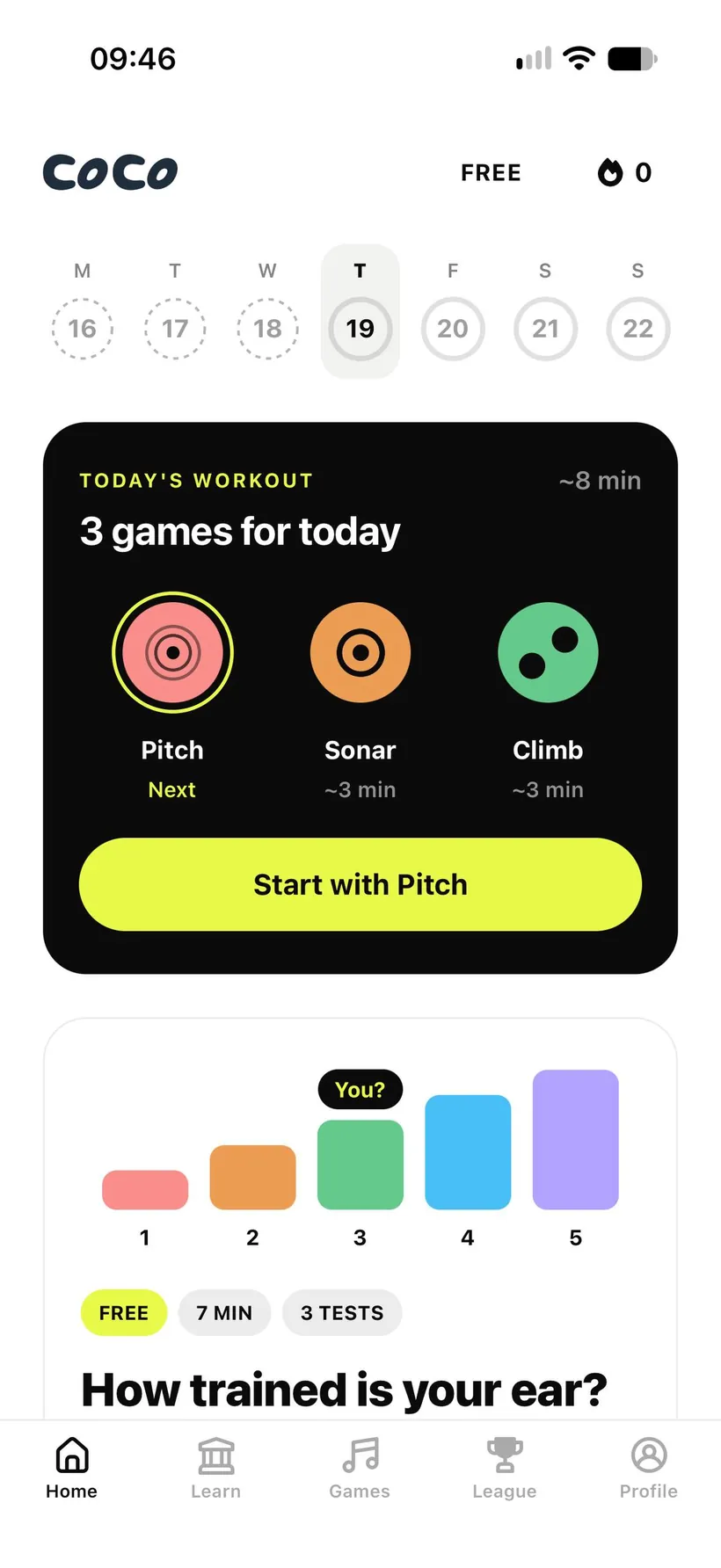
Open today’s workout
Three short games, picked for you, in one card. The yellow button starts the first one.
 2Step 2
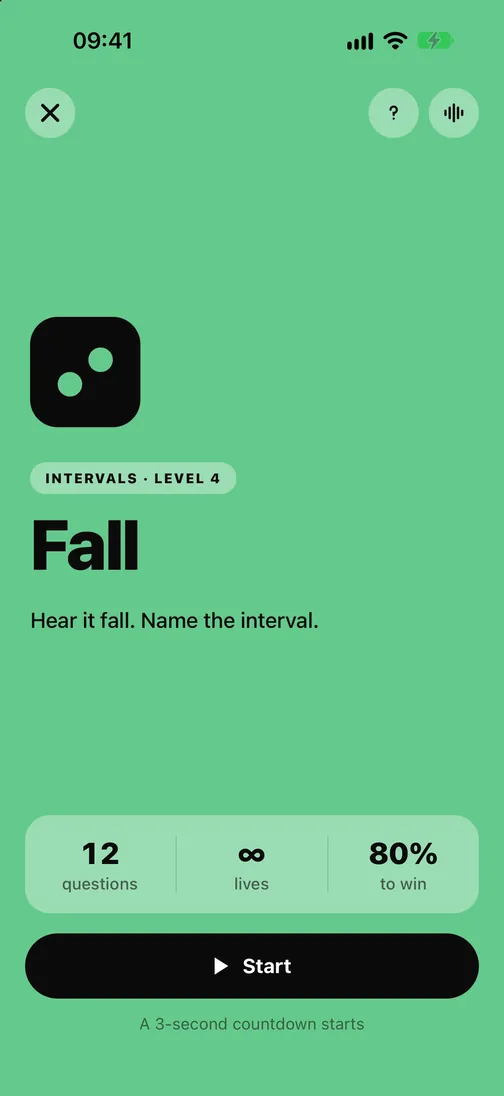
Know what you’re training
Before each game you see its skill, how many questions it has and what score wins. In Fall, for example, the interval goes down and you name it.
 3Step 3
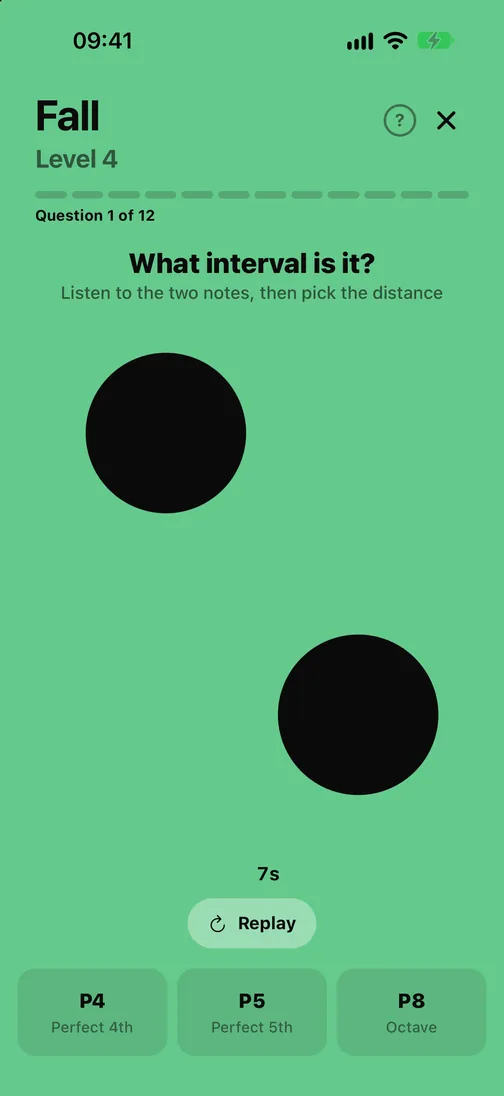
Listen, then answer by ear
Some sounds play and you name the note, interval, chord or scale.
 4Step 4
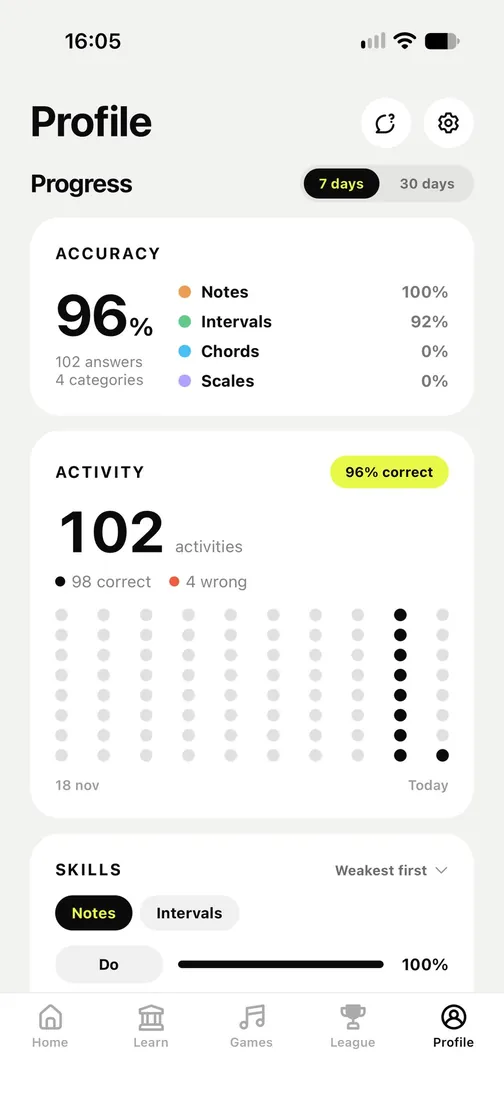
See what to work on next
Your profile ranks every note, interval, chord and scale by accuracy, weakest first.
What’s inside the app
Coco, and the way you do it now
| With Coco | Without | |
|---|---|---|
| Finding the chords of a song | With CocoYou train your ear until you hear the interval or the chord first, then play it. | WithoutYou pause the recording again and again and look up the tab. |
| Years of lessons | With CocoNotes, intervals, chords and scales, trained by ear. | WithoutLessons and theory train reading and playing, and the ear is left to chance. |
| Paying before you’ve played | With Coco7 days free to play everything, and the prices are on this page. | WithoutApps that ask you to subscribe before you’ve played a game. |
| Singing | With CocoEcho and Solo: sing the degree, or sing the note. | WithoutApps where you can only tap an answer. |
| Talent | With CocoYou practise your ear the way you practise scales. | WithoutDeciding you were born without the talent. |
Your ear can be trained. At any age.
Adults aged 18 to 27 went from 68.9% to 88.2% correct at comparing musical intervals after three days of practice.
Little, Cheng & Wright, 2019Non-musicians started out over six times worse than classical musicians at telling two pitches apart. After 4 to 8 hours of practice they matched them.
Micheyl et al., 2006In a study of 20,850 people, only 1.5% had congenital amusia, the technical name for being tone deaf.
Peretz & Vuvan, 2017A review of 62 long-term studies with 3,928 people found that music training gives a small but real boost to how we process sound.
Neves et al., 2022What the studies say about practice
- 1
Mix answering with listening
Four days of non-stop practice produced no learning. The same amount of practice, alternated with stretches of just listening, did.
Little, Cheng & Wright, 2019 - 2
Gains carry over
The improvement reached a sound the learners had not trained on, and a task they had not practised: naming the interval.
Little, Cheng & Wright, 2019 - 3
The shape of a melody comes first
Adults who trained on short note sequences got better at hearing the rises and falls of a melody. Hearing the exact pitches did not improve.
Foxton et al., 2004
One subscription, all of Coco. 7 days free.
Secure checkout by RevenueCat · Cancel anytime
Questions before you start
What is the best free ear training app?
Does ear training actually work?
How long does it take to train your ears?
What is the best way to practise ear training?
What is ear training?
What is relative pitch?
Is Coco free? Do I have to subscribe?
Do I need perfect pitch? Can I learn it?
Am I tone deaf?
Probably not. In a study of 20,850 people, only 1.5% had congenital amusia, the technical name for it (Peretz and Vuvan, 2017). The free ear test takes about 7 minutes and needs no account.
Test your earHow do the singing games work?
I teach music. Is there a plan for my students?
Yes. Music schools have their own page, with a price per student.
For music schoolsYour first workout takes less than 10 minutes.
Play on web7 days free, then a subscription. Cancel anytime.
Prefer the app? Get it on the App Store or Google Play.